Inside CovrGardDOES PPF INCREASE RESALE VALUE?

DOES PPF INCREASE RESALE VALUE? HERE’S WHAT THE EVIDENCE SHOWS…

The honest answer is yes, but probably not in the way you expect.

PPF doesn’t *add* value to your car, but it does protect the condition – and that decides the resale value of your vehicle when you come to sell or trade up. In the UK used market, that can be worth a lot.

A well-maintained car in excellent condition typically sells for 10-20% more than an identical car in average condition. On a £40,000 vehicle, that can account for £4,000-£8,000 of the final sale price. CovrGard PPF doesn’t create that value, but it does help you reach it.

The more useful way to think about it is that every stone chip, swirl mark, and faded panel that builds up during your ownership reduces the resale value of your car. CovrGard paint protection films help prevent this.

Why condition is crucial for resale value

When a buyer looks at a used car, paint condition is one of the clearest visible signs of how a vehicle has been treated, and it directly influences what they’ll pay.

UK resellers grade vehicles by condition. A car that drops one grading category due to visible paint wear can lose value before the buyer has even checked the mileage. In private sales, the effect is the same. Chips on the front bumper, swirl marks in direct light, or signs of a respray are all met with the same reaction: a lower opening offer.

People are also more knowledgeable than they used to be. Paint depth gauges, once a trade tool, are now common among informed private buyers.

PPF addresses these problems directly, keeping the condition of your paint as close as possible to the condition you bought it in.
 

Protect now, or repair later?

One part of the argument is what sellers typically spend on a car before it goes on the market.

Common UK pre-sale preparation costs:

Work type

Typical UK cost

Machine polish (swirl removal)

£250-£600

Chip repair

£150-£400

Single panel respray

£800-£1,500

Multi-panel paint correction

£2,000-£5,000+

Any of these processes can cause more issues. For instance, colour matching on old paint can be imprecise, and repainted panels show as non-original on inspection, which reduces buyer confidence – even if the respray was  professionally done.

A five-year-old dark-coloured performance car with typical motorway use will often need machine polishing and chip repair on the bonnet and front bumper before private sale. At conservative UK pricing, that’s £400-£1,000 spent on a vehicle that still shows evidence of wear when looked at closely.

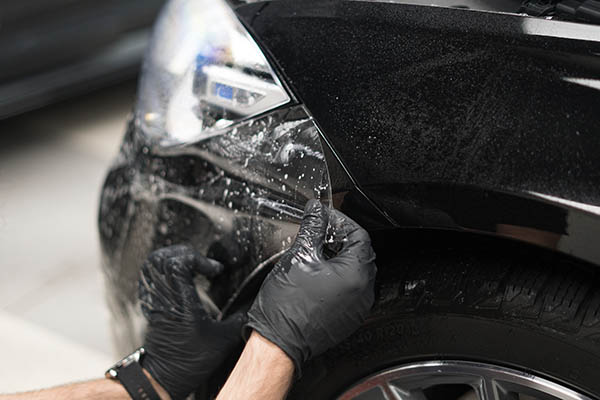
Full-body PPF on a vehicle like this, fitted at purchase, costs roughly £3,500+, depending on film grade and coverage. Front-end PPF (bonnet, bumper, headlights, door edges) is on the range of £800-£1,500. Compare this to the costs of repairing damage, or regular paint touch-ups, and the argument for spending the money protecting the paint is obvious. More importantly, PPF gives you your original factory paint, untouched, underneath.

a white volkswagen golf driving out of a multi storey car park

PPF versus ceramic coating for resale

This question comes up a lot, so let’s look at the differences.

Ceramic coating forms a semi-permanent layer over the paint surface. It improves gloss, makes the car easier to clean, and offers some resistance to contamination, but it doesn’t stop physical impact wear. Stone chips and road debris pass straight through a ceramic coating to the paint below.

PPF is a physical barrier and absorbs these impacts. Chips, gravel strikes, and light contact damage stop at the film surface.

For resale purposes, the damage that reduces used car values most visibly is paint damage. Ceramic coating doesn’t prevent it, PPF does. If you’re choosing one for resale, PPF is the more obvious choice (although many owners have both).

Where PPF makes the most difference

PPF isn’t the right choice for every car. It works best when the car is new or nearly new. Fitting PPF before any chip damage occurs is the only way to guarantee original paint underneath at resale. It’s also dependent on how long you intend keeping the car.

It’s less cost-effective on older vehicles with existing paint damage (PPF locks in current condition, it doesn’t restore it), on lower-value cars where the installation cost is a large proportion of market value, and on short-term ownership where little damage would accumulate anyway.

Should you leave PPF on when selling?

Yes. High-quality PPF in good condition is an asset at the point of sale. It tells the buyer the paint underneath has been actively protected. Removing it reveals the original paint, which should be excellent if the film was applied correctly and early. Keep any installation paperwork and warranty documentation. If the film is damaged, yellowed, or lifting at edges, removal before sale may be the better choice. That’s usually down to an inferior film quality or installation issue – not a problem with CovrGard PPF generally.

CovrGard PPF

CovrGard is built around consistent performance across real UK ownership conditions: road salt through winter, UV on dark paint in summer, the combination of motorway debris and urban damage that most vehicle owners encounter regularly. Our range (GLOS+, GLOS, SATN, CRBN, BLAK, LITE) covers both clear and finish-appropriate applications. Find your nearest CovrGard certified installer to get a quote for your vehicle.

Common questions about PPF and resale value

Does PPF increase resale value in the UK?
It protects your ability to achieve the top of your car’s resale value range rather than increasing the value itself. In a market where condition differences between excellent and average grade can represent 10-20% of value, that protection is important. The effect is strongest on newer, higher-value, and darker-coloured vehicles.

Is PPF worth it for resale?
For newer or higher-value vehicles, yes. It means you avoid pre-sale repair and reconditioning costs, giving you the best return on investment.

Is PPF better than ceramic coating for resale?
For paint protection specifically, yes. Ceramic coating improves gloss and maintenance but does not prevent stone chips or physical impact damage. PPF does. Many owners use both, but if resale value is the main goal, PPF is the one that directly prevents the damage.

What does PPF cost in the UK?
Front-end coverage (bonnet, bumper, headlights, door edges) runs roughly £800-£1,500. Full-body PPF on a prestige or performance vehicle costs £2,000-£3,500 and above, depending on the vehicle, film grade, and installer. Against multi-panel correction costs of £2,000-£5,000+ at resale time, the comparison is often straightforward.

Should I remove PPF before selling?
No, unless the film is degraded. Good PPF in good condition demonstrates protected paintwork. Keep the warranty documentation. If the film is yellowed or lifting, removal before sale may be worth considering.


READ MORE INSIGHTS FROM COVRGARD…

Social media

en_USEnglish