

JAK DŁUGO DZIAŁA FOLIA OCHRONNA?
CovrGard General Manager Keith Mansfield answers your questions
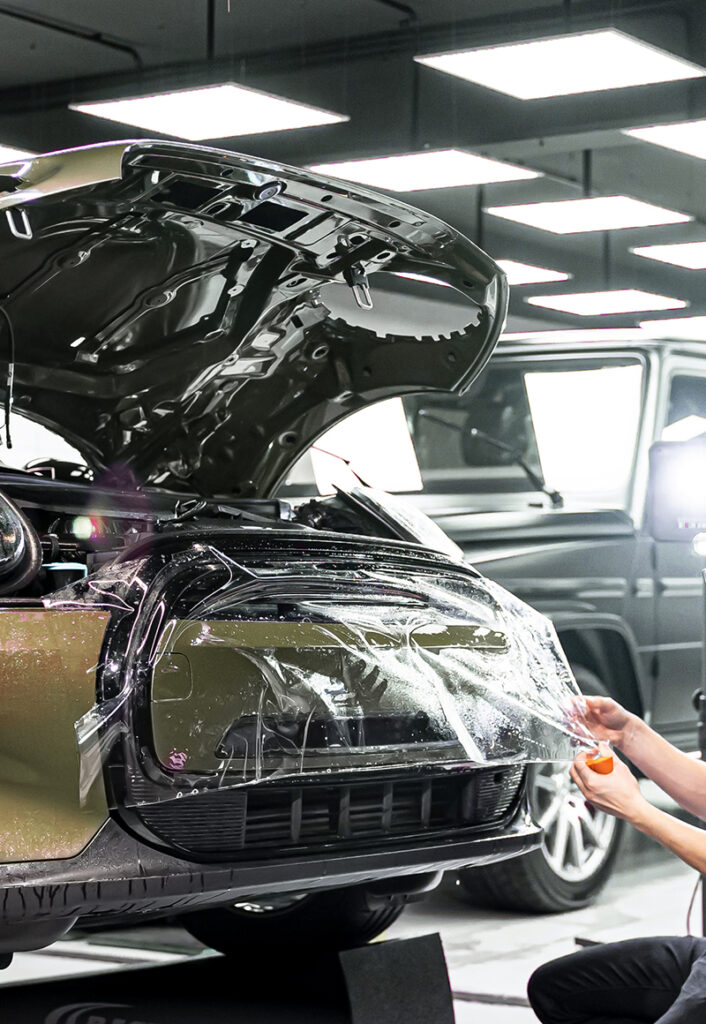
“So, paint protection film is a transparent polyurethane layer that’s applied to a vehicle’s painted surfaces. It protects your paint against stone chips, fine scratches, insect residue and UV exposure.
“It wasn’t originally developed for cars. Early versions were used by the military to protect helicopter rotor blades and armoured vehicle edges from high-velocity debris. The same principle is applied to road cars, from daily drivers to high-value vehicles – any instance where protecting the paintwork is important.
“You’ve probably come across PPF but aren’t sure whether it justifies the cost. This guide will tell you what PPF does, what it doesn’t do, how it compares to ceramic coating, what to look for in an installer, and why it’s usually cheaper to protect your car paint from day one than try to repair it after damage has been done.”
What PPF protects against
PPF is effective at preventing:
- Stone chips on front-facing panels
- Fine scratches from washing and light contact
- Etching from bird droppings and insect residue
- UV-related fade over time
- Minor abrasion around edges, mirrors and high-contact areas
What PPF does not protect against
“PPF isn’t structural protection. It won’t prevent dents, collision damage, or problems caused by failing paint beneath the surface. Any chips or scratches already on your car will stay visible – they’re sealed in and can’t be hidden.”

The cost of repairing paint damage
“Just one stone chip repair in the UK typically costs between £150–£400. On higher-end vehicles or specialist finishes, that cost can rise quickly due to colour matching.
“ The recurring issue is once the repair has been done the car is immediately susceptible to this happeining again and again so if you’re regularly driving your vehicle on motorways – and that’s where most of your chip damage occurs – the potential cost of repair is endless. PPF prevents the damage instead of you having to repeatedly repair it.
“When it comes to matte, satin, or specialist finishes, these paints can’t be polished in the usual way, so any damage often means repainting the entire panel and the costs escalate dramatically.”
PPF versus ceramic coating – which one do you really need?
“This isn’t a one-or-the-other choice, as they do different jobs. Ceramic coating is a liquid layer that bonds to paint (or PPF). It brings out the gloss finish, repels water and contaminants, and makes cleaning easier. What it can’t do is absorb impact – a stone chip will damage the paint in the same way as unprotected paint. PPF is a physical barrier. It’s thicker, flexible, and designed to take impact.
“Used together, they complement each other. PPF protects high-impact areas such as the bonnet, wings, bumpers and mirrors. Ceramic coating can then be applied over the film and across the rest of the vehicle.
“If you want to prevent impact damage on a regularly driven vehicle, then PPF is the only choice that protects your paint.”
How can you tell when PPF has been installed properly?
“The installation quality is as important as the film itself.”
Precision-cut templates
CovrGard installers typically use software-cut patterns (using our GRAFX application) that are specific to each vehicle.
Controlled environment
Installation should take place in a clean, dust-free space. Any contamination trapped under the film will remain visible.
Clear film specification
CovrGard is a premium quality PPF. The quality of other films varies significantly, depending on the manufacturer. A reputable installer will specify exactly what product is being used and why.
Appropriate coverage
Not every vehicle needs full-body PPF. A good installer will recommend coverage based on usage, not simply cost. Front-end protection typically offers the most real-world benefit. You can read more about typical PPF coverage packages here ››
How CovrGard approaches film and installation quality
“CovrGard produces all its own PPF, so we maintain complete control over material specification, film quality, supply chain and stock holding.
“Our GRAFX software system means installers are working with templates that are physically test-fitted before we release them. This means that the pattern has been test-fitted to a real panel, not just a digital model.
“Installers in the CovrGard network are trained and accredited by us directly, which means you’re getting a consistent standard across installations.
“If you’re considering CovrGard PPF, our accredited installers mean that both the material and the person doing the fitting have met extremely high standards.”
Porady ekspertów dotyczące konserwacji, aby zmaksymalizować żywotność CovrGard PPF
- Umyć ynasz samochód regularnie Brud, brud i inne codzienne zanieczyszczenia drogowe mogą gromadzić się na folii, prowadząc do jej przedwczesnego zużycia. Postępuj zgodnie z tymi najlepszymi praktykami, aby wszystko wyglądało jak najlepiej:
- Użyj Szampon samochodowy o neutralnym pH, taki jak CovrGard WASH aby zapobiec uszkodzeniu powierzchni folii.
- Umyć przy użyciu metoda dwóch wiader aby uniknąć zadrapań.
- Wysuszyć za pomocą ręcznik z mikrofibry aby zapobiec powstawaniu plam z wody.
- Unikaj agresywnych chemikaliów Silne rozpuszczalniki, odtłuszczacze i kwaśne środki czyszczące mogą osłabić folię. Trzymaj się produktów czyszczących bezpiecznych dla PPF, takich jak specjalnie opracowany asortyment CovrGard, aby zachować przejrzystość i trwałość folii.
- Zachowaj ostrożność podczas korzystania z myjni automatycznych Myjnie szczotkowe mogą być zbyt agresywne i mogą powodować przedwczesne podnoszenie lub łuszczenie się krawędzi. Zamiast tego należy wybrać myjnie bezdotykowe lub mycie rąk.
- Parkowanie w garażu lub na parkingu
Długotrwała ekspozycja na słońce może powodować uszkodzenia spowodowane promieniowaniem UV i żółknięcie. Parkowanie w zacieniony obszar lub garaż może pomóc zachować przejrzystość i skuteczność PPF.
- Natychmiast usuń wszelkie zanieczyszczenia
Podczas gdy PPF chroni lakier przed rozpryskami owadów i wytrawieniem, sama folia może ulec zanieczyszczeniu. Ptasie odchody, soki z drzew i rozpryski owadów zawierają substancje kwasowe, które mogą uszkodzić folię. Należy je jak najszybciej usunąć za pomocą Przyjazny dla PPF quick detailer, taki jak CovrGard BUGX.
- Unikać wody pod wysokim ciśnieniem na krawędziach folii
Jeśli do czyszczenia samochodu używasz myjki ciśnieniowej, upewnij się, że dysza jest ustawiona na co najmniej Odległość 12 cali i unikaj natryskiwania bezpośrednio na krawędzie, ponieważ wysokie ciśnienie może spowodować podnoszenie.
- Okresowo sprawdzaj folię
Co kilka miesięcy należy sprawdzać PPF pod kątem oznak zużycia. Jeśli zauważysz drobne złuszczanie, podnoszenie lub zanieczyszczenie, skonsultuj się z profesjonalistą w celu naprawy lub wymiany.
Czy folia ochronna na lakier jest opłacalna w dłuższej perspektywie?un?
Absolutnie! Ale wtedy byśmy tak powiedzieli, prawda? Oto kilka powodów, dla których powinieneś to poważnie rozważyć:
Chociaż CovrGard PPF wymaga początkowej inwestycji, jego korzyści przewyższają koszty:
 Zachowuje ynasz samochód's rwartość sprzedaży: Chroni przed zadrapaniami, odpryskami i blaknięciem.
Zmniejsza potrzebę napraw lakieru: Oszczędność pieniędzy na ponowne lakierowanie i poprawki.
Poprawia estetykę pojazdu: Utrzymuje świeży wygląd samochodu.
Długoterminowa ochrona: Jest to szczególnie cenne w przypadku samochodów luksusowych, sportowych lub codziennie narażonych na trudne warunki drogowe.

How to get the most out of CovrGard PPF
Aby zapewnić jak najdłuższą żywotność folii ochronnej na lakier, należy zlecić jej Profesjonalnie zainstalowanyi podążaj za ścisła rutyna konserwacji. Podejmując te kroki, możesz cieszyć się Co najmniej dekada doskonałej ochrony lakieru zachowując nieskazitelny wygląd samochodu.
Potrzebujesz profesjonalnej instalacji PPF?
Jeśli rozważasz zastosowanie PPF w swoim pojeździe lub potrzebujesz porady eksperta w zakresie konserwacji obecnej folii, skontaktuj się z zatwierdzonym instalatorem CovrGard w pobliżu. Inwestycja w profesjonalną aplikację i właściwą pielęgnację zapewnia maksymalne korzyści z folii ochronnej.
Często zadawane pytania (FAQ)
P: Czy mogę woskować lub polerować folię ochronną CovrGard?
O: Tak, ale najlepiej używać wosków i past polerskich bezpiecznych dla PPF. Nie używaj produktów na bazie wosku carnauba i unikaj środków ściernych, ponieważ mogą one uszkodzić powierzchnię folii.
P: Czy folia ochronna CovrGard z czasem żółknie?
O: Nasze folie PPF zawierają inhibitory UV, które zapobiegają żółknięciu. Jednak nawet najwyższej jakości folie mogą odbarwiać się w wyniku wnikania brudu, jeśli nie są prawidłowo konserwowane.
P: Czy CovrGard PPF można usunąć bez uszkodzenia samochodu?'farby?
O: Tak, po usunięciu przez profesjonalistów nasz PPF schodzi czysto bez wpływu na oryginalną farbę.
P: Czy CovrGard PPF jest lepszy niż powłoka ceramiczna?
Nasz PPF oferuje ochrona fizyczna przed odpryskami i zadrapaniami, podczas gdy powłoka ceramiczna zapewnia odporność chemiczna i łatwość czyszczenia, niektórzy właściciele decydują się na połączenie obu tych rozwiązań w celu uzyskania najlepszych rezultatów.
P: Czy CovrGard PPF wymaga specjalnych środków czyszczących?
O: Podczas gdy nasz PPF jest trwały, najlepiej jest używać specjalnie opracowanej gamy Produkty do pielęgnacji CovrGard jak Szampony o neutralnym pH i nieścierne środki czyszczące aby zachować jego klarowność i trwałość.
Q: How long does CovrGard paint protection film last??
A: Typically 7–10 years with correct maintenance.
Q: Will CovrGard PPF change how my car looks?
A: On gloss paint, it’s effectively invisible in normal conditions. Some films show slight texture under direct light. Matte and satin films are designed to blend with original factory finishes.
Q: Is CovrGard PPF worth applying to an older car?
A: Only if the paint is in good condition. Poor surfaces should be corrected before installation.
Postępując zgodnie z poniższymi wskazówkami ekspertów, zapewnisz sobie Folia ochronna na lakier pozostaje skuteczna przez wiele latutrzymując samochód w nieskazitelnym stanie i zachowując jego wartość.
Protect your car properly – find a CovrGard installer
If you’ve decided CovrGard PPF is right for your vehicle, installation quality is the next step.
CovrGard’s accredited network uses our own film and GRAFX template system to maintain a consistent standard.
Speak to our team to find your nearest installer and understand which level of coverage suits your vehicle.
 Polish
 English
 Dutch
 French
 Swedish
 German
 Hindi